
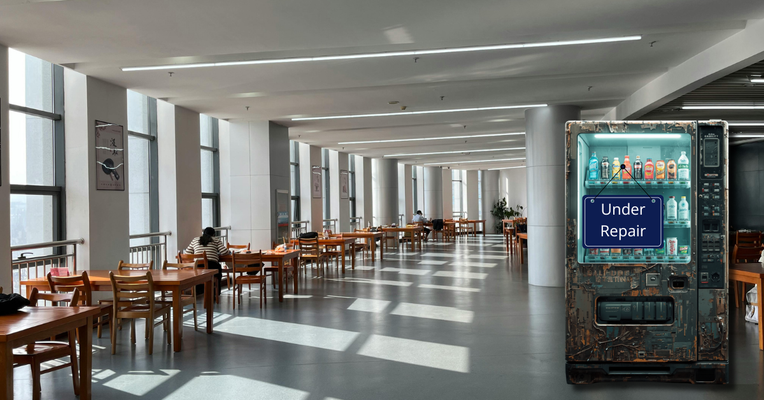
Often, the real problem is hidden issues that quietly hurt the customer experience and lead to fewer repeat purchases. Spotting these warning signs early helps operators avoid losses and make better decisions about upgrades.
1. Frequent Downtime Creates Silent Revenue Loss
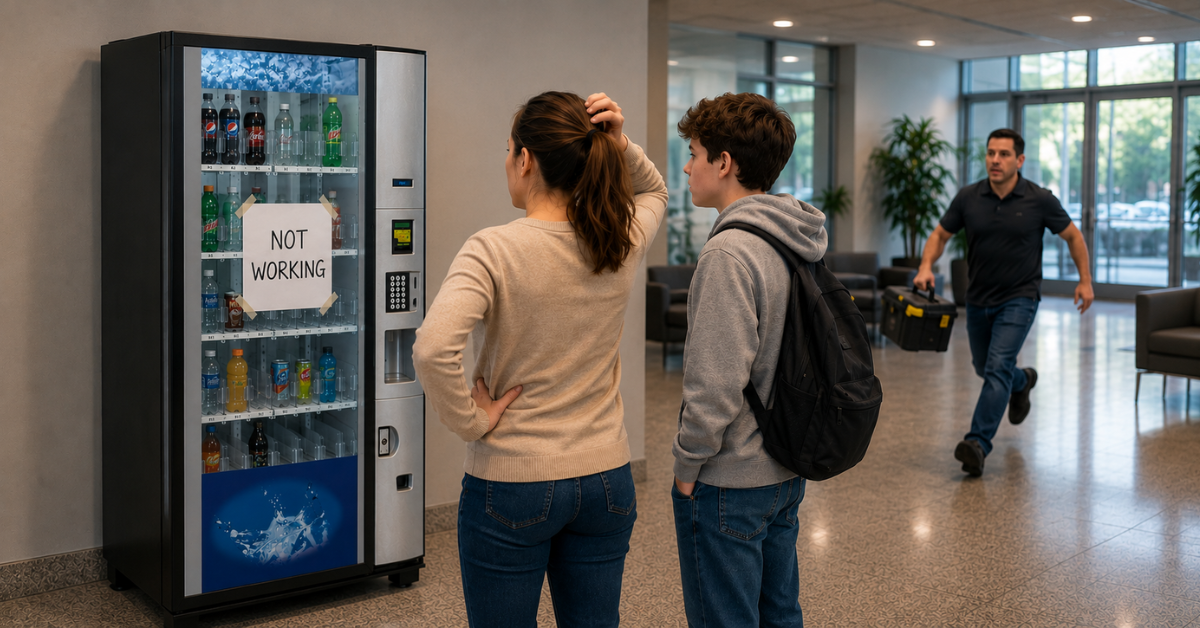
Recurring downtime is a clear warning sign. When a vending machine is often out of service, customers lose trust and eventually stop using it.
Downtime can come from:
- Cooling system failures
- Coin or bill acceptor issues
- Jammed dispensing systems
- Software or communication errors
Even brief interruptions can lead to many missed sales over time. The National Automatic Merchandising Association says that reliable machines are key to keeping customers and encouraging repeat purchases.
If you’re dealing with frequent service calls, it’s worth considering if repairs are still cost-effective or if replacing the machine would be better in the long run.
You can also review ASI’s guidance on used vending machines to understand how properly maintained equipment can continue to perform well across many locations.
2. Slow Response Times Frustrate Customers
People today want vending machines to be fast and easy to use. Slow screens, delayed payments, or slow product delivery often cause customers to walk away without making a purchase.
Common causes include:
- Aging control boards
- Outdated software
- Weak internet connectivity
- Failing touchscreens or buttons
Customers might not always notice what’s wrong, but slow service makes them trust the machine less and feel less satisfied. Over time, this can lower your total sales.
When thinking about upgrades, businesses often compare new technology with what they already have to determine where improvements will matter most. ASI’s guide to vending machine solutions can help you find the best options for your location.
3. Product Problems Damage Customer Confidence
If a machine frequently produces defective products or doesn’t work properly, customers remember those bad experiences.
Some common warning signs include:
- Products getting stuck
- Inconsistent cooling temperatures
- Expired inventory due to poor turnover
- Broken spirals or motors
According to the Food and Drug Administration, proper food temperature management is essential for maintaining product safety and quality in vending operations.
Just one bad experience can stop a customer from coming back, especially in busy places where they have other choices.
Regular maintenance and good inventory management are important, but if problems keep happening, it might mean the machine isn’t right for that spot anymore.
For operators expanding or refreshing their equipment strategy, ASI’s information on smart vending solutions may offer additional flexibility for certain high-volume locations.
4. Outdated Payment Systems Reduce Purchases
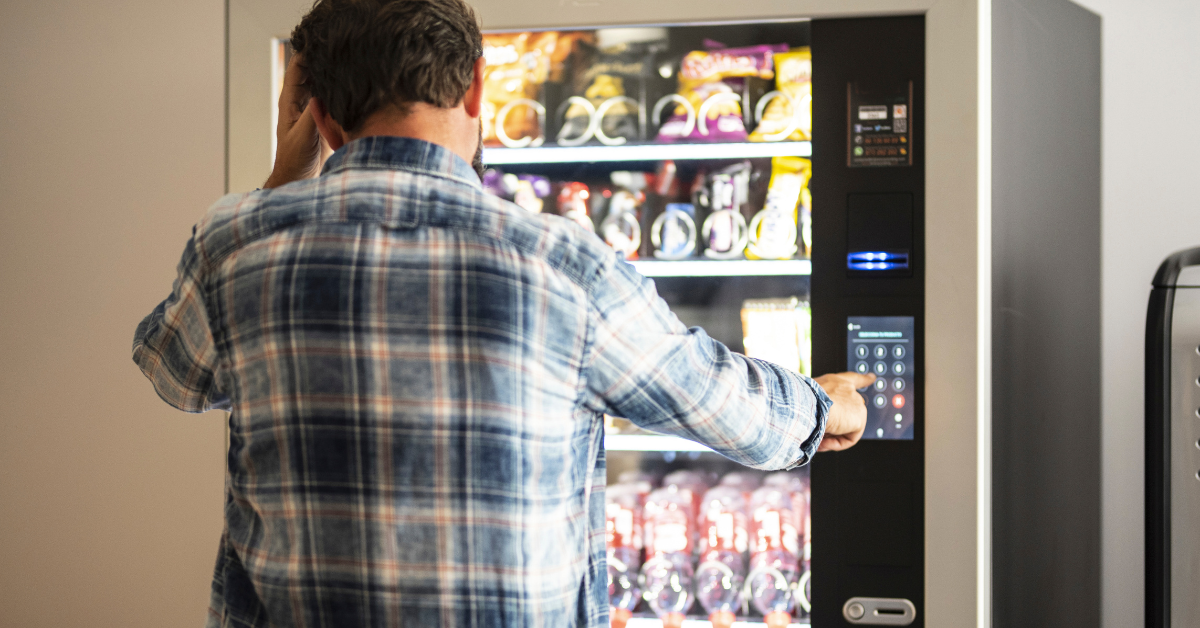
Cashless payment capability is no longer optional in many environments. Customers increasingly expect:
- Credit card acceptance
- Mobile wallet payments
- Tap-to-pay functionality
- Contactless checkout experiences
Machines that only take cash often lose sales because most people don’t carry cash anymore.
Research from the Federal Reserve continues to show increasing adoption of digital and contactless payments across everyday transactions.
Google Search Phrase: Federal Reserve digital payment trends
Old payment systems can also cause failed transactions, which frustrates customers and makes them trust the machine less.
If your payment options are making things harder for customers, consider upgrading or replacing your equipment to match how people like to pay today.
5. The Machine May No Longer Fit the Location
A vending machine might still work, but it can underperform if it doesn’t align with the location’s traffic or customer preferences.
Examples include:
- Snack-only machines in wellness-focused workplaces
- Low-capacity equipment in high-demand environments
- Machines without modern beverage options
- Equipment placed in low-visibility areas
How well a machine fits its location is just as important as its condition. As customer needs change, successful vending businesses adapt.
ASI often helps operators decide if small changes, new equipment, or a different setup would work better for their specific location.
Why Condition Matters More Than Age
A used machine that’s well taken care of can often do better than a newer one that isn’t maintained. What matters most are reliability, customer experience, ease of payment, and how well the machine fits the location.
Instead of focusing only on the manufacturing date, operators should evaluate:
- Service history
- Customer complaints
- Downtime frequency
- Payment flexibility
- Product performance
- Location compatibility
This way, businesses can make smarter choices and avoid spending money on replacements they don’t need.
Take the Next Step

If you notice any of these warning signs in your vending machines, it might be time to consider making changes, upgrading, or replacing them. ASI can help you check your equipment, payment options, and location fit so you can make the best decision. Want to take the next step? Contact ASI to get started.