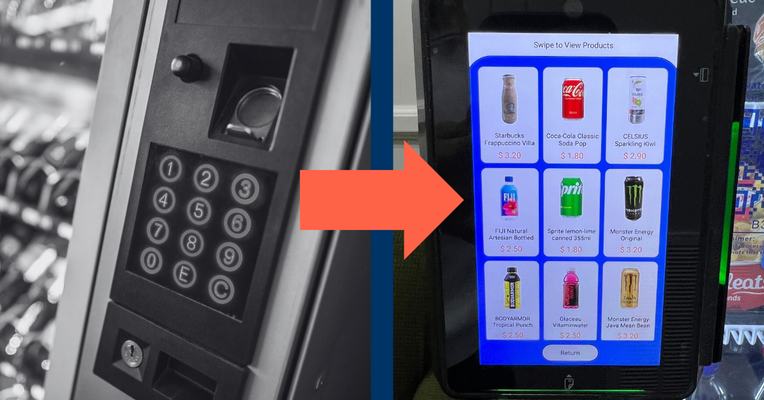
For an experienced vending operator, unfamiliar technology can raise more questions than excitement.
Traditional vending machines come with established workflows. Operators know how to stock them, troubleshoot them, choose products, evaluate locations, and recognize when something isn't performing correctly. Moving toward smart coolers, AI-assisted retail, or other newer formats means learning something different, and hesitation is understandable.
But experience with traditional vending does not have to conflict with innovation. In many cases, it's the best tool for deciding whether new technology deserves a place in the operation.
Why Can New Vending Technology Feel Risky?
Experienced operators have spent years developing systems that work.
A traditional machine has familiar components, predictable service routines, and a well-understood customer experience. New equipment may introduce software, connected systems, different payment processes, remote management, or unfamiliar troubleshooting requirements.
The concern is not necessarily resistance to technology. It is often resistance to unnecessary disruption.
That distinction matters. Operators should not adopt technology simply because the industry is talking about it. NAMA industry research describes traditional vending, smart coolers, and micro markets as formats as complementary tools rather than formats that must replace one another.
Experience allows an operator to ask the more important question: What problem would this technology solve for my business or customer?
You Do Not Have to Abandon Traditional Vending

New equipment does not make proven equipment obsolete.
Traditional machines can remain the right solution for many accounts. Smart coolers simply introduce another format operators can evaluate when the location, merchandise, and customer experience call for something different.
ASI itself comes from traditional vending roots. The company's vending history dates back decades, long before today's connected retail technology.
That perspective matters because innovation does not require forgetting what operators already know.
Operators exploring a newer format can review the BRITE by ASI™ Smart Cooler to understand how features such as computer vision, connected management, and automated checkout differ from conventional vending.
Let Experience Be the Filter
Experienced operators already know how to evaluate the fundamentals:
- Is the location strong enough?
- Does the product mix fit the equipment?
- Will customers understand how to use it?
- Can the operation support stocking and service?
- Does the technology work with existing business processes?
Those questions remain relevant regardless of how advanced the machine becomes.
Industry technology standards are also moving toward giving operators maximum flexibility to choose equipment that fits individual customer needs rather than forcing every account into one format.
Integration can make that transition easier. ASI has announced that BRITE smart coolers are being integrated with Cantaloupe's Seed platforms, helping address a common concern for operators who do not want to manage completely separate systems.
New Technology Still Requires Good Operations
Automation does not eliminate the fundamentals of vending.
Product selection, inventory management, equipment reliability, location quality, and customer needs still matter. NACS has emphasized that autonomous retail still requires operational discipline from the operator.
That is where experienced operators may have an advantage. Technology can change how a transaction happens, but experience still helps determine whether the location and business model make sense.
Take the Next Step

Operators do not need to choose between experience and innovation. The better approach is to use experience to evaluate innovation carefully.
Keep traditional vending where it works. Explore newer technology where it solves a genuine operational or customer need. Ask questions, understand the workflow, and determine whether the technology fits your operation before making the change.
To discuss traditional vending, smart coolers, or where a newer format may fit your route, Contact ASI.
People Also Ask
Are smart coolers replacing traditional vending machines?
Not necessarily. Smart coolers and traditional vending machines can serve different locations, products, and operating needs. Many operators may use multiple formats within the same business.
Why might experienced vending operators hesitate to adopt new technology?
New technology can introduce unfamiliar software, payment systems, service procedures, and workflows. Experienced operators may reasonably want to understand those changes before disrupting systems that already work.
How should operators evaluate new vending technology?
Start with the operational need. Consider the location, products, customer behavior, service requirements, integration needs, and whether the new format solves a meaningful problem better than existing equipment.