
Getting a new vending location is exciting. More machines mean more stops and more chances to make sales. But if you pick the wrong spot, you might waste time, fuel, inventory, and money before your machine even gets a fair shot.
A good vending spot is about more than just having space. You need people walking by, good visibility, easy access, security, and real customers. The U.S. Small Business Administration says location choices affect your business for the long run. The same goes for vending. Where you put your machine affects sales and how easy it is to keep things running smoothly.
At ASI, we know vending can bring in extra income if you work hard and plan well. Still, one of the best skills you can have is knowing when to say no.
Here’s a simple checklist to help you spot bad vending locations before they turn into costly mistakes.
1. The “Ghost” Hallway
Vending machines need lots of people walking by. A quiet hallway might look like a good spot, but if only a few people pass each day, your machine could stay full and products might get old.
Low-traffic spots usually mean slow sales and wasted products. Items that do not sell quickly can lose freshness, especially snacks and things that need to stay cool. The USDA says many food dates are about quality, so it is important to keep products moving if you want happy customers and less waste.
What to Watch For
Be careful if the machine is in a hallway few people use, a side entrance with little activity, or a spot visitors do not usually pass. Your vending machine should be easy to find and part of the building’s daily routine.
Before you agree to a spot, ask how many people use the area each day, when it is busiest, and if people often take breaks nearby.
2. The Hidden Corner
Being seen is key to sales. If your machine is hidden behind stairs, in a back corner, or out of the way, it might not do well, even in a busy place.
People use vending machines when they are easy to see, reach, and use. If customers do not notice your machine throughout their day, sales will likely drop.
Better Placement Matters
Breakrooms, main hallways, waiting areas, and spots near the lobby are usually better than hidden corners. The idea is simple: place your machine where people already stop, walk by, or make quick choices.
When reviewing a possible placement, stand where the customer would stand. Can the machine be seen clearly? Is there enough room to browse? Is the area comfortable and accessible? Small placement details can make a major difference.
3. The Vandalism Magnet
A vending machine holds equipment, products, and cash, so security really matters.
Areas that are dark, unsecured, or not watched can be risky. If your machine is in a location with limited staff, no cameras, or poor after-hours security, you could lose money quickly due to repairs or stolen products. OSHA’s workplace safety advice emphasizes the importance of identifying risks and implementing prevention measures, which is just as true for vending. Always think about safety when choosing a spot.
Security Questions to Ask
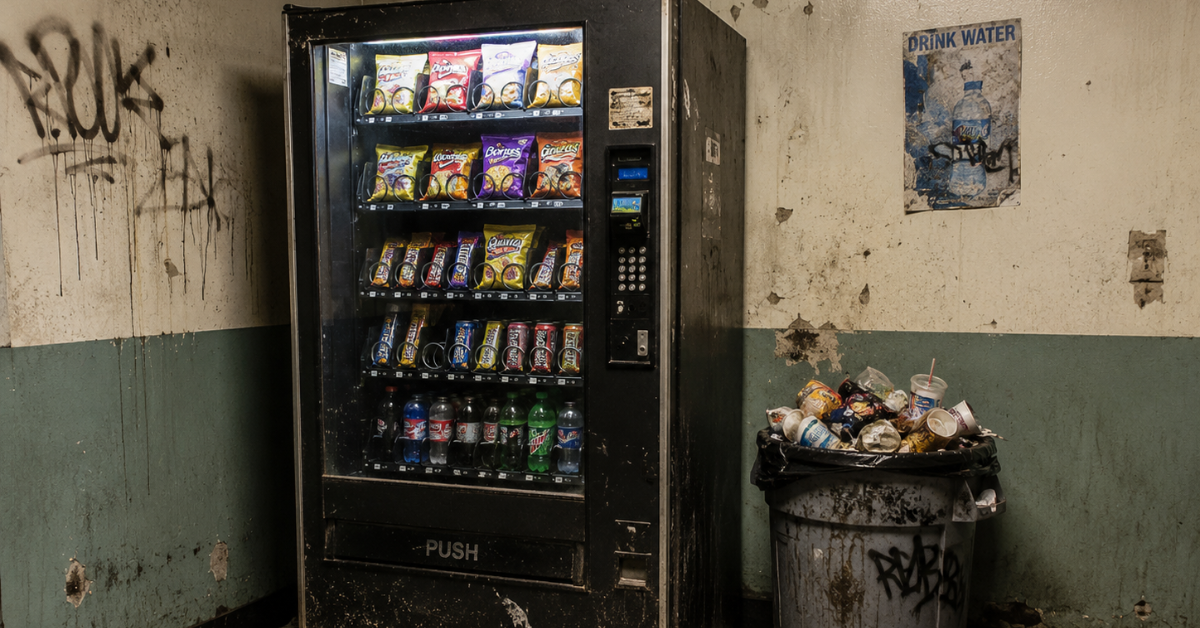
Before you put a machine in, check whether the area has cameras, staff present, controlled entry, good lighting, and whether there have been any prior thefts or vandalism. The spot does not have to be perfect, but it should not be risky.
Protecting your machine starts before you deliver it. When looking at equipment, check out ASI’s refurbished vending machines to find one that fits your location, budget, and needs.
4. The Low-Population Stop
Not every business has enough people to support a vending machine. A small office may love the idea of having snacks and drinks on-site, but good intentions do not always create enough sales to justify a route stop.
Many operators use employee count as an early screening tool. For traditional workplace vending, a site with fewer than 40 to 50 full-time employees may be challenging unless it has strong visitor traffic, long operating hours, or limited nearby food options.
Think Beyond the Headcount
Employee count is not the only factor. A small location may still work if people are on-site all day, breaks are limited, outside food options are inconvenient, or the machine fills a specific need.
Still, route economics matter. Fuel, labor, stocking time, and maintenance all count. If a location cannot realistically support the service schedule, it may create more work than it returns.
For locations that need a different customer experience, operators can also explore BRITE by ASI™ Smart Coolers as an option for modern self-service retail environments.
5. The Competitive Overload
One of the best things about vending is convenience. But if there are already many other options, that advantage diminishes.
Free snacks in the breakroom, a cafeteria, a nearby store, or another micro market can all lower your vending sales. This does not always mean the spot is bad, but you should take a closer look.
Scout Before You Commit
Before saying yes, walk the site and the surrounding area. Look for free employee snacks, nearby food retailers, coffee stations, cafeteria service, competing machines, or other grab-and-go options.
Competition is not always a dealbreaker. A drink machine may still perform well when snacks are free, or a specialty-product machine may work where traditional snacks do not. But you should understand the competitive environment before investing in equipment, delivery, and inventory.
Bonus Red Flag: Poor Access for Delivery and Service
Even a great spot can be a problem if it is hard to get to. Tight doors, stairs, little parking, no freight elevator, or limited service hours can make every visit tough.
This matters because vending is not a one-time setup. You need to restock, collect, maintain, and occasionally move equipment. If access is difficult from day one, service costs can keep adding up.
When a location has unique product needs or space limitations, ASI’s custom vending machine options can help operators select equipment that better fits the environment.
Build Your Route on Data, Not Hope
A simple location review can help you avoid expensive mistakes. Look at traffic, visibility, employee count, security, access, competition, and service needs. Then compare those factors against your route goals.
A Practical Vending Machine Location Checklist
Before you say yes to a new placement, ask:
- Does the area have consistent daily foot traffic?
- Can customers easily see and access the machine?
- Is the location secure, monitored, and well-lit?
- Are there enough employees, visitors, or repeat users to support sales?
- Are nearby competitors or free snacks likely to reduce demand?
- Can the machine be delivered and serviced without unusual difficulty?
- Does the location fit your route schedule and growth plan?
A quick review of each spot can help you avoid costly mistakes. Check traffic, visibility, employee count, security, access, competition, and service needs. Then see how these match your route goals.
Take the Next Step

Choosing the right vending location is easier when your equipment strategy supports your business goals. ASI can help you compare machine options, think through placement needs, and choose equipment that fits the way your route is built. When you are ready to move forward with a smarter vending plan, contact ASI for practical support and machine guidance.