A vending machine can have an impressive feature list and still be the wrong equipment for a particular location. Before comparing models, evaluate how people will actually use the machine, what the site can accommodate, and which features solve a real operational need.
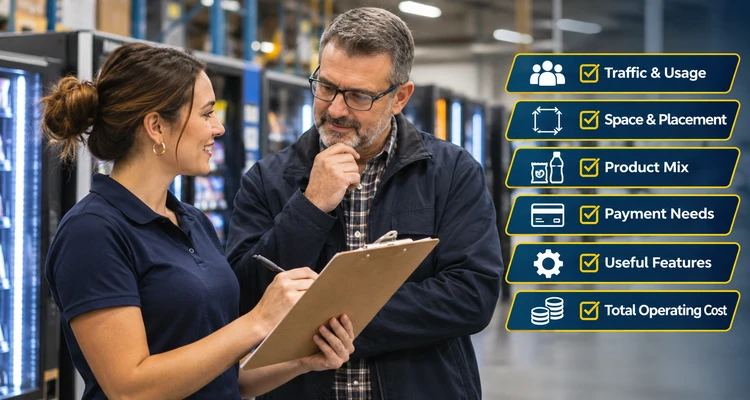
These six factors can help narrow the choices before you buy.
1. Expected Traffic and Usage Patterns
Start with who will use the machine and when.
A warehouse operating multiple shifts may have very different demand from a small office with predictable daytime traffic. Consider the approximate number of potential customers, peak periods, and how frequently the machine can realistically be serviced.
Higher traffic can justify greater capacity, while a smaller location may benefit more from equipment sized to its actual demand.
2. Available Space and Placement
Measure more than the machine footprint. Account for door clearance, loading access, electrical connections, customer approach space, and room for servicing.
Placement must also meet accessibility requirements. ADA small-business accessibility guidance explains that an accessible route should remain clear and should not be obstructed by equipment such as vending machines.
Before selecting equipment, confirm the dimensions and installation requirements for the specific model.
3. Product Mix and Selection Needs
The products customers want should help determine the machine—not the other way around.
A beverage-heavy location may be better served by ASI’s cold drink vending machines, while other accounts may need snacks, combination equipment, or a different format altogether.
Selection count also matters. More choices can help, but only if the location has enough demand to support them without creating unnecessary inventory complexity.
4. Customer Payment Preferences
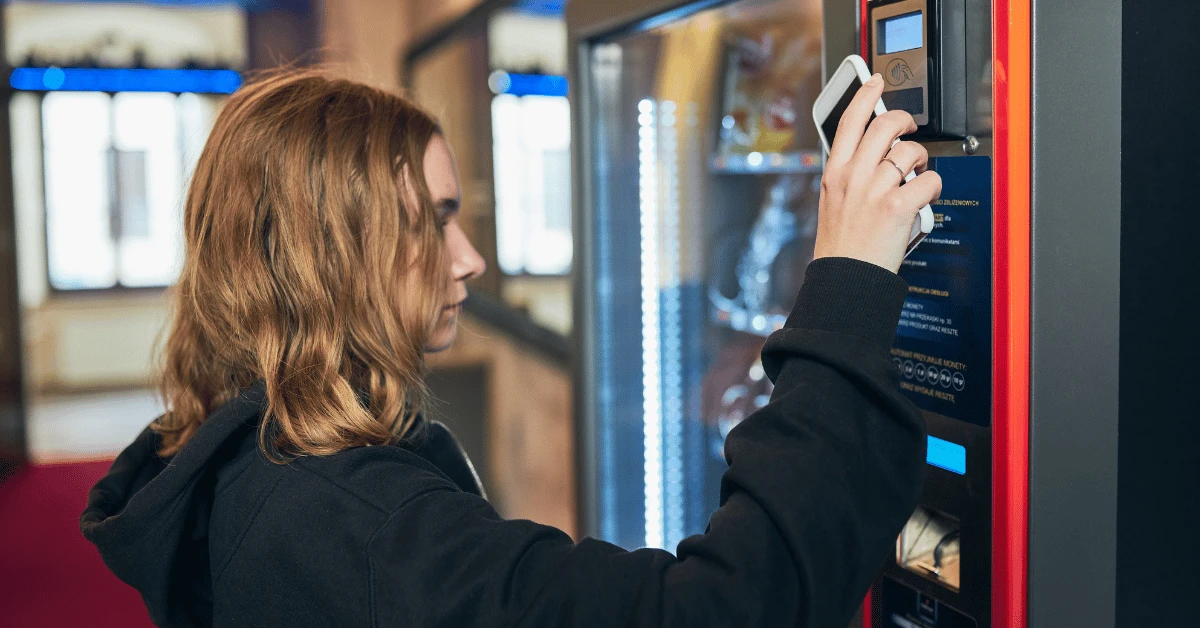
Think about how customers at the location are likely to pay. Depending on the machine and installed hardware, that may include cash, card, or other electronic payment methods.
Also evaluate payment equipment for compatibility and security. Payment terminals are within PCI DSS scope when they capture payment card data, although the applicable requirements depend on the device and configuration.
Confirm payment capabilities before purchasing rather than assuming every machine supports the same setup.
5. Which Features Will Actually Be Used?
More features do not automatically make a machine a better fit.
For example, the BevMax 5800 lineup demonstrates why operators may choose among different configurations. A location may value an interactive touchscreen, while another may prioritize selection capacity, proven delivery hardware, or a lower equipment cost.
The important question is not, “Which model has the most features?” It is, “Which features improve this particular location?”
When comparing refurbished equipment, ASI’s price categories and warranty information can also help clarify what is included with different equipment conditions.
6. Purchase Price and Ongoing Operating Needs
Equipment cost is only one part of the decision. Consider service accessibility, payment upgrades, energy use, stocking needs, and available capital.
For refrigerated equipment, the U.S. Department of Energy establishes federal energy conservation standards for refrigerated beverage vending machines. DOE also recommends properly sizing machines to facility needs because larger equipment can consume more energy.
Operators managing equipment costs can also review ASI’s vending machine financing options.
Take the Next Step

The right vending machine fits the location’s traffic, available space, customers, product mix, payment needs, and operating budget. Comparing those factors first makes it easier to evaluate equipment based on practical fit, not features alone.
For help comparing machines for a specific location, contact ASI.
People Also Ask
What should I check before buying a vending machine?
Evaluate location traffic, available space, expected product demand, payment requirements, useful machine features, and your total equipment budget.
Does vending machine size depend on location traffic?
Yes. Capacity should reflect expected demand, available space, stocking frequency, and the type of products being sold.
Should I choose a vending machine based on features?
Features should support a specific location need. A touchscreen, larger selection count, or upgraded payment system is valuable only when it improves the customer or operator experience.